

Tesla Patent Revele Micro-Cone Camera Housing With Active Glare Control
One of the most persistent and frustrating challenges for Tesla’s FSD suite is a problem that every human driver knows well: getting blinded by the sun.
Musk has stated that Tesla’s camera housing is a major focus for the company.
Whether it’s the harsh, low-angle light of dawn and dusk, or the glare of high beams at night, light saturation can render a camera or a pair of eyes temporarily useless.
When a camera is blinded like this, though, FSD loses critical data, often leading to degraded performance, disengagements, or the dreaded red hands takeover warning on the screen.
The Physics of Glare
To understand the solution, we first need to look at the problem.
Traditional glare shields in vehicles - the plastic housing you see around front-facing or fender cameras - are typically just flat pieces of textured plastic.
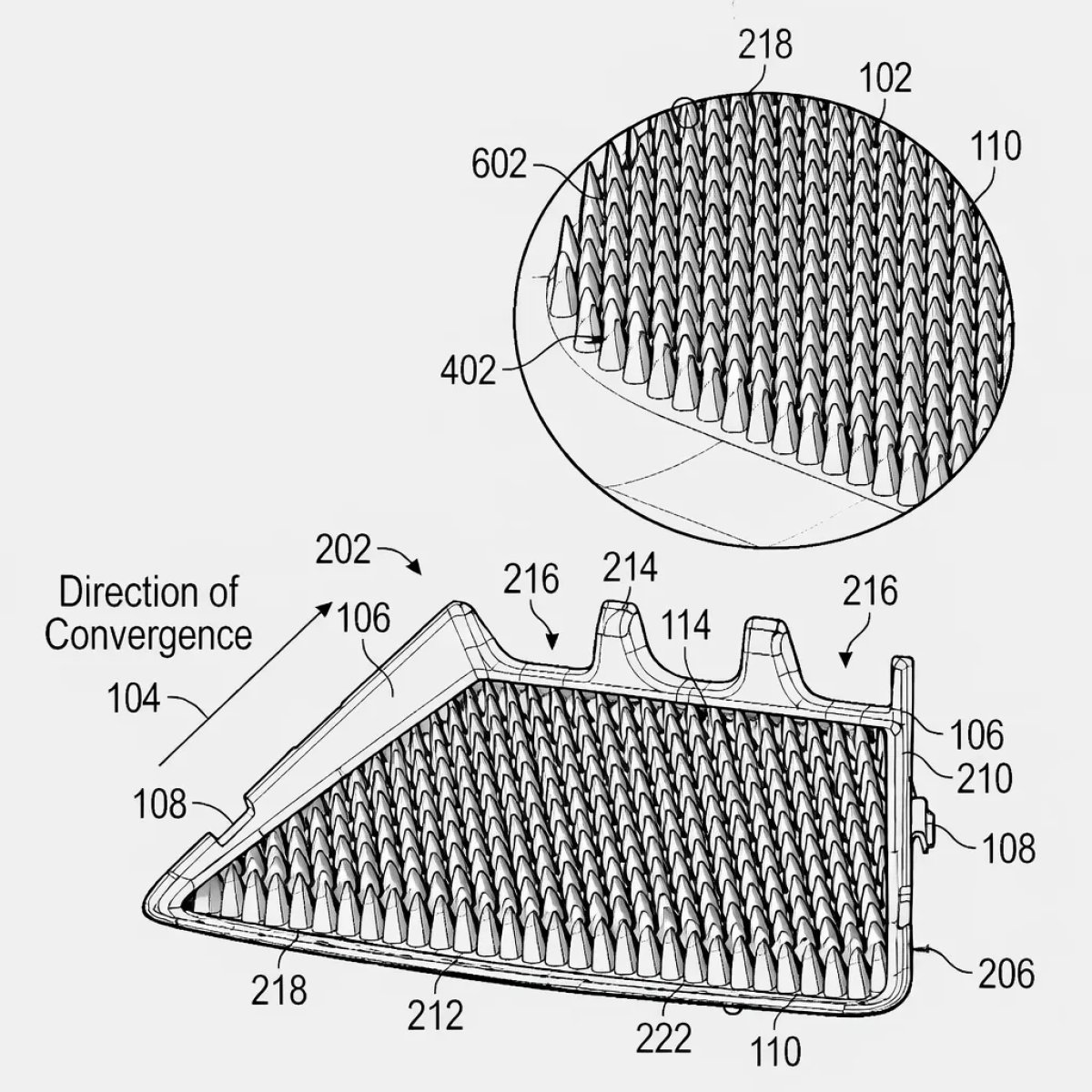
Micro-Cone Geometry
Tesla’s proposed solution replaces those flat surfaces with a complex, three-dimensional array of micro-cones.
Imagine the acoustic foam wedges used in recording studios to deaden sound.
Now, shrink those thousands of times - Tesla is applying the same principle to diffuse light, but on a microscopic scale.

A Moving Shield
Perhaps the most futuristic aspect of the patent is the description of an electromechanical adjustment system.
Tesla isn’t just relying on static plastic; they are proposing a shield that moves, much like a human eyelid.
Manufacturing Wizardry
Tesla is known for rethinking manufacturing, and this small part is no exception.
You might wonder: how exactly do you mold plastic into millions of microscopic, sharp-tipped cones without them getting deformed, scraped off, or otherwise damaged?
Why This Matters
This patent highlights the extreme level of detail Tesla is pursuing to solve the edge cases of autonomous driving.